Masking fluid is a solution of latex rubber which is applied to the paper and allowed to dry to create a ‘mask’ which can be overpainted then later removed to leave white paper where the masking was applied.
It is used to reserve highlights and other light areas whilst allowing broad washes to be painted across them.
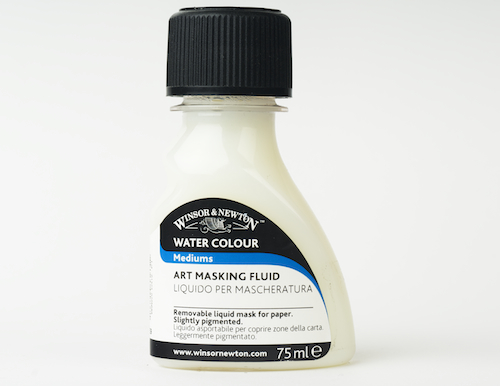
Important points to remember when using masking fluid:
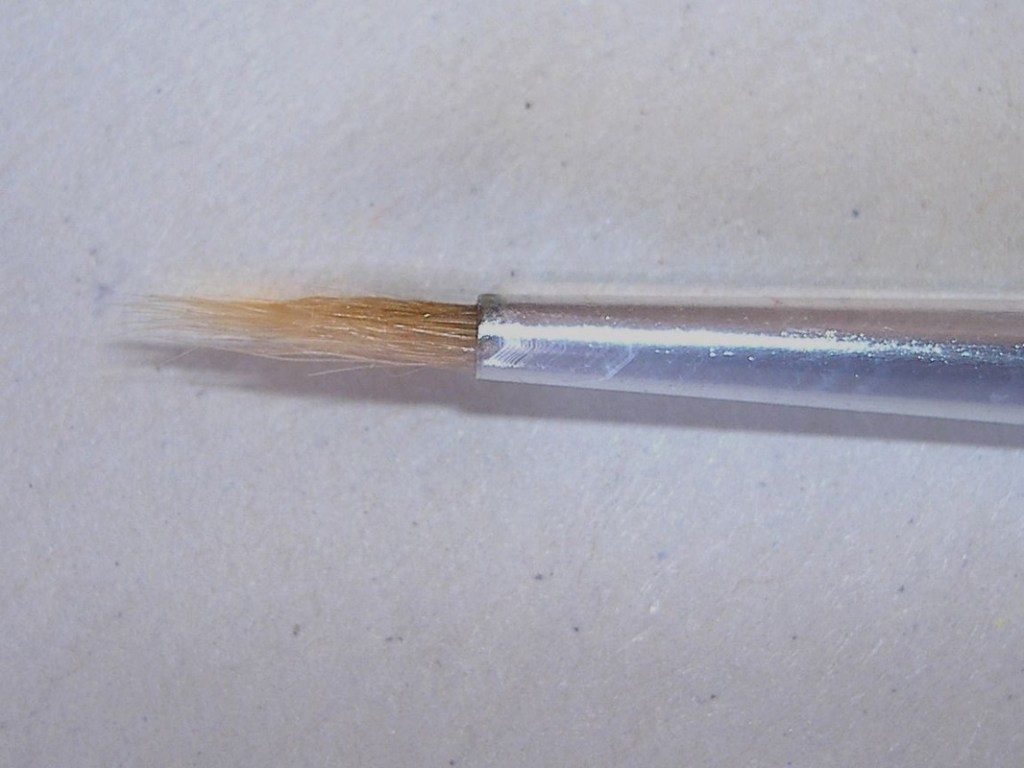
- Do not use expensive brushes to apply it – use a cheap or old brush or a colour shaper
- Test it on a peice of the paper you are using first – if the paper surface is too soft it may tear the paper when you lift the fluid
- Don’t coat too areas which are too large – for these mask the complex shapes at the edges and use masking tape for the big area in the middle (or just paint round them).
- Make sure it is dry before you paint over it
- Do not leave it on for too long – the longer it is on the more likely it will tear when you lift
- Do not use heat (eg a hair dryer) to dry washes when you are using masking fluid – again it may lead to tears (that’s rips in the paper)
Steps in using masking fluid
Use a colour shaper (top – shaped rubber tip with a variety of uses)

… or a cheap/old brush
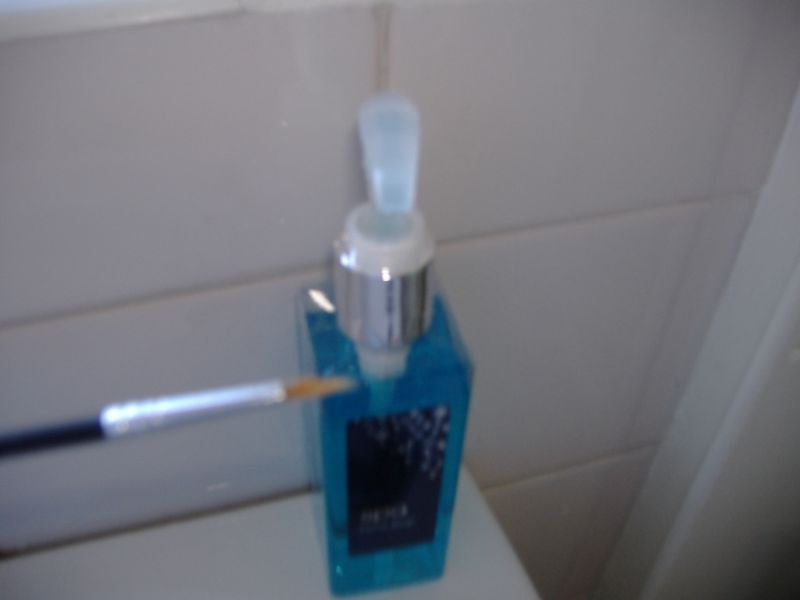
Coating the brush with soap before use will
make it easier to clean later
Apply the masking fluid to the areas you want
to be white in the finished painting

Paint your washes – you can go over the masking
without fear of losing the whites you want to keep
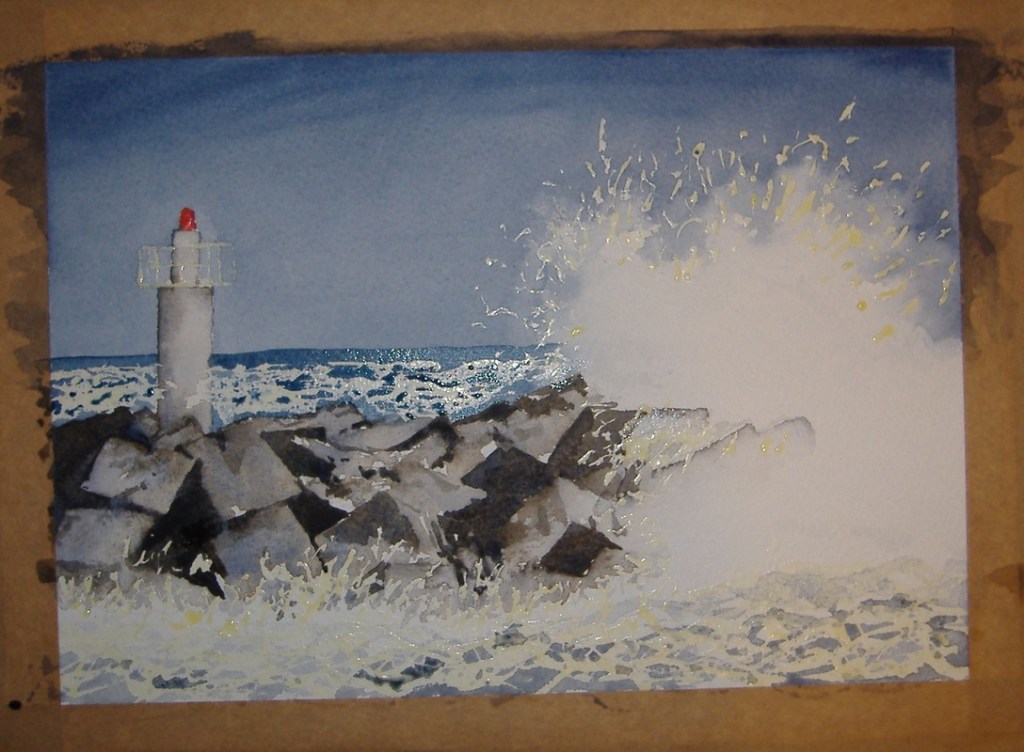
When the paint is dry remove the masking fluid by rubbing it gently.
(Click on images to view at a larger size)
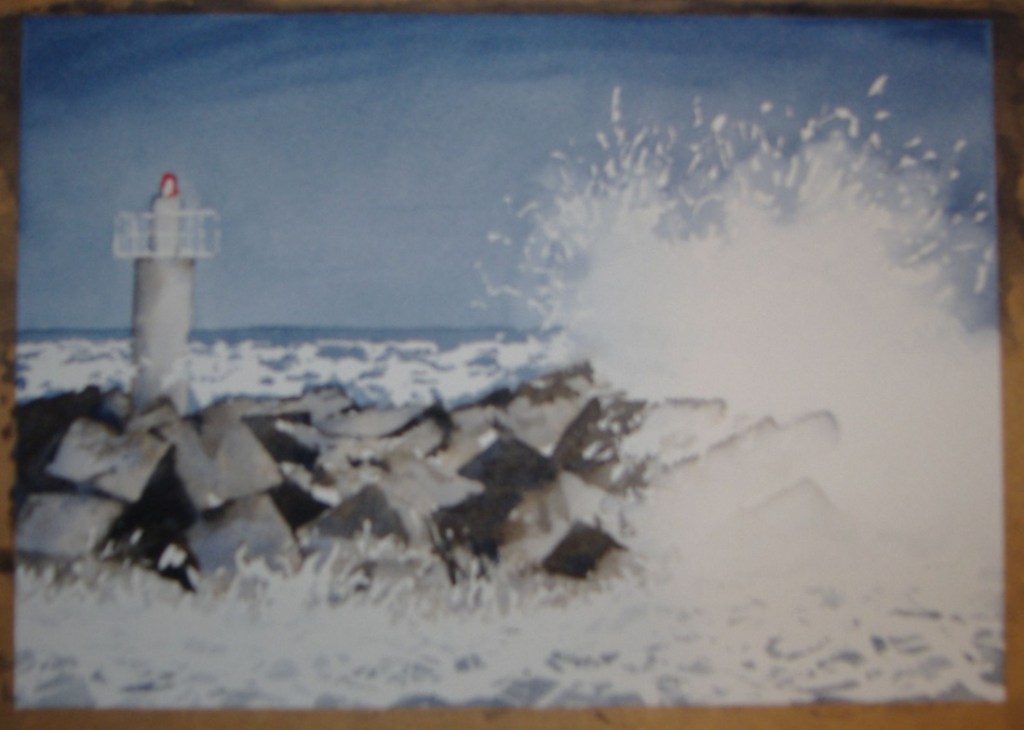
As well as masking fluid you can use masking tape or Frisket masking film. After the masking is removed you will find the edges left are very hard and might prefer to soften them slightly with a brush wetted with clean water. Once the masking is removed you are able overpaint the area if required – you might soften the bright white with a very pale wash of cream or yellow.
Another masking method is to use a wax candle or crayon to draw on the paper. Where the wax sticks to the paper the watercolour will be repelled and the white paper retained. In this case the masking is permanent.
 Jons Watercolours